
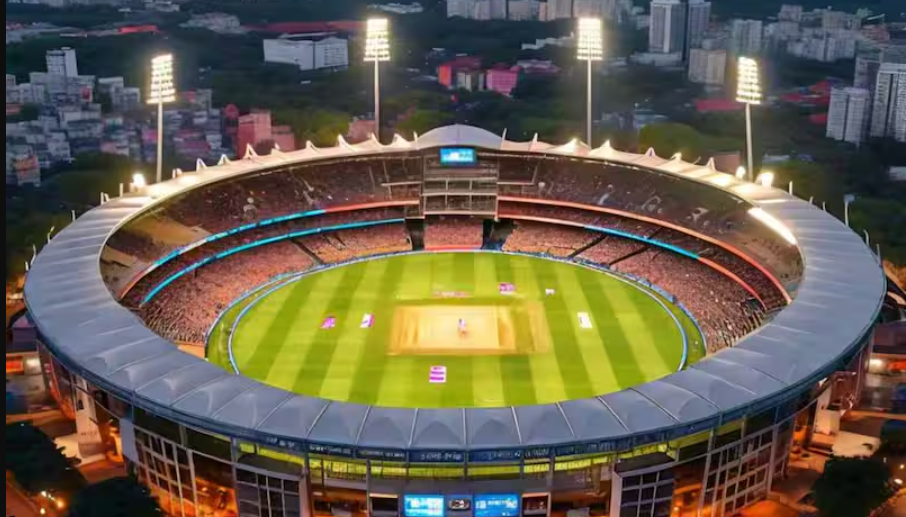
India’s relationship with sporting infrastructure tells a story of national ambition made physical. From colonial-era grounds that have hosted cricket for over a century to purpose-built modern arenas designed for global broadcast standards, the country’s stadium landscape reflects both its sporting heritage and its increasingly serious investment in world-class facilities. No other nation in South Asia has built sporting infrastructure at the scale India has over the past two decades — and the venues themselves have become part of the sport’s drama. Fans following Indian sport across cricket, football, and beyond can explore competitive markets and live coverage at dbbet bd.
Why India’s Sporting Venues Matter Beyond the Game
Stadiums are not merely containers for competition — they shape the experience of sport in ways that affect players, fans, and the broader culture surrounding each discipline. A ground with a fierce home atmosphere creates genuine competitive advantage. A well-maintained pitch influences match outcomes directly. A stadium with quality broadcast infrastructure attracts hosting rights that bring global attention to domestic competitions. India understands this equation better than most. The sustained investment in upgrading and building sporting venues across the country reflects a strategic understanding that world-class sport requires world-class settings. Every major renovation project and new construction represents a statement of intent — that India expects to host and compete at the highest level indefinitely.
The Bengaluru Football Stadium: Home of Indian Club Football
The Bengaluru football stadium — formally the Sree Kanteerava Stadium — holds a special place in Indian football history. It has served as the primary home ground of Bengaluru FC, one of the most successful clubs in the Indian Super League era, and has witnessed some of the most intense atmospheres in domestic football. The stadium’s capacity sits around 24,000, making it one of the larger dedicated football venues in the country. Its location in the heart of Bengaluru gives it an urban energy that translates into crowd intensity on match evenings. The ground has also hosted Indian national team fixtures, international friendlies, and AFC Cup matches, giving it a competitive pedigree that extends well beyond domestic club football. Plans for a new dedicated football stadium in Bengaluru have circulated for years, reflecting both the city’s ambition and the ISL’s growing commercial profile.
Eden Gardens: The Cathedral of Indian Cricket
No discussion of India’s sporting venues begins anywhere other than Eden Gardens in Kolkata. With a capacity exceeding 66,000, it is one of the largest cricket stadiums in the world and carries a historical weight that no other Indian ground matches. Test cricket has been played here since 1934. The atmosphere during day-night Test matches and IPL fixtures is widely described by players as among the most intimidating and electric in world cricket. Eden Gardens has hosted World Cup finals, iconic Test matches, and IPL seasons with equal authority. The ground underwent significant renovation before the 2011 ICC Cricket World Cup, improving facilities while preserving the character that makes it irreplaceable. Kolkata Knight Riders’ home fixtures here routinely rank among the most watched domestic cricket broadcasts globally.
The Hyderabad Cricket Stadium: Rajiv Gandhi International
The Hyderabad cricket stadium — officially the Rajiv Gandhi International Cricket Stadium — sits in the Uppal district and represents modern Indian cricket infrastructure at a high standard. Opened in 2004 with a capacity around 55,000, it replaced the historic Lal Bahadur Shastri Stadium as Hyderabad’s primary international cricket venue. The ground features excellent sight lines, a well-maintained drop-in pitch system, and broadcast facilities that meet ICC requirements for all formats. Sunrisers Hyderabad use it as their IPL home, generating an atmosphere during franchise cricket that contrasts sharply with the more formal environment of international matches. The stadium has hosted memorable ODIs and T20 Internationals and is increasingly being considered for Test match inclusion as Hyderabad’s cricketing infrastructure continues to mature.
India National Cricket Team Arenas: The Full Network
The India national cricket team arenas form a network that spans the country’s geographic and cultural diversity. Wankhede Stadium in Mumbai — rebuilt in 2011 and site of India’s World Cup final victory that same year — holds 33,000 and remains one of cricket’s most prestigious addresses. The M. Chinnaswamy Stadium in Bengaluru is famous for its high-scoring matches and raucous crowds. Chepauk in Chennai, formally the MA Chidambaram Stadium, is one of the oldest cricket grounds in India and produces spin-friendly pitches that have humbled visiting teams for generations. The Narendra Modi Stadium in Ahmedabad, with a capacity exceeding 130,000, is now the largest cricket stadium in the world — a facility that rewrote the scale of what cricket infrastructure could look like.
The Narendra Modi Stadium: Cricket’s Biggest Canvas
The Narendra Modi Stadium deserves its own examination simply by virtue of its scale. Renovated and reopened in 2020, the Ahmedabad ground replaced the Sardar Patel Stadium with a facility that holds over 132,000 spectators — nearly double the capacity of the second-largest cricket venue on earth. The infrastructure investment involved was enormous: new practice facilities, a clubhouse, multiple dressing rooms, and broadcast infrastructure capable of supporting the most demanding international production requirements. Hosting the 2023 ICC Cricket World Cup final before a packed house demonstrated that the stadium could deliver the logistical execution its scale demands. Critics have questioned whether such capacity is genuinely necessary for cricket, but as a statement of India’s position in global sport, the Narendra Modi Stadium makes its point unmistakably.
IPL and the Transformation of Indian Venues
The Indian Premier League has been the single most significant driver of stadium infrastructure improvement in Indian cricket over the past fifteen years. Franchise owners, broadcasting partners, and the BCCI collectively demanded venues that could deliver premium broadcast production, comfortable spectator experiences, and consistent pitch quality across a condensed tournament schedule. The result has been systematic venue upgrades across every IPL host city. Floodlighting, video scoreboards, hospitality boxes, improved drainage systems, and enhanced security infrastructure have all been installed or upgraded at grounds that had served adequately for decades without pressing need for modernization. Cities without IPL-standard venues have been excluded from hosting consideration, creating a competitive dynamic between state cricket associations that has accelerated investment timelines considerably.
Football Venues Beyond Bengaluru: A Developing National Network
While the Bengaluru football stadium anchors the ISL’s southern presence, the national football venue network extends across multiple cities with varying facility standards. The Salt Lake Stadium in Kolkata — officially Vivekananda Yuba Bharati Krirangan — has a capacity exceeding 85,000 and remains one of Asia’s largest football-specific venues, hosting Mohun Bagan and East Bengal in fixtures that generate some of the most passionate atmospheres in Asian club football. Mumbai’s DY Patil Stadium serves as an ISL venue with modern facilities and a more intimate scale. The Jawaharlal Nehru Stadium in Delhi has hosted national team matches and continental competitions but requires ongoing investment to maintain international standards. Football infrastructure across India remains more variable in quality than cricket, reflecting the sport’s historically lower position in the national sporting funding hierarchy.
Stadium Technology and the Modern Fan Experience
India’s top sporting venues have invested heavily in technology that transforms the spectator experience beyond simply watching a match. The Narendra Modi Stadium and the renovated Wankhede both feature high-definition LED scoreboards visible from every seat, multiple broadcast camera positions including drone and spider-cam systems, and app-based services that allow fans to order food, access replays, and navigate the venue from their smartphones. Floodlighting systems at IPL venues are now designed specifically for broadcast quality rather than merely spectator visibility, ensuring that night match footage meets the color accuracy standards demanded by global television partners. Biometric entry systems are being trialed at major grounds to reduce queuing times and improve security. These investments reflect a recognition that modern sport fans — particularly younger audiences — expect an entertainment experience that extends well beyond ninety overs of cricket.
What India’s Venue Development Means for South Asian Sport
India’s stadium investment does not exist in isolation — it sets benchmarks and creates expectations across the entire South Asian sporting region. When Bangladesh, Sri Lanka, or Pakistan assess their own infrastructure ambitions, they do so against the context of what India has built. The Narendra Modi Stadium’s existence reframes what a cricket venue can be. The ISL’s venue standards push football infrastructure conversations in neighboring nations toward higher baseline expectations. Regional federations and international governing bodies now hold South Asian hosts to higher facility standards partly because India has demonstrated that the region is capable of delivering them. For smaller nations like Bangladesh still building their venue inventory, India’s trajectory offers both inspiration and a realistic long-term roadmap for what systematic infrastructure investment across multiple sporting disciplines can eventually produce.