
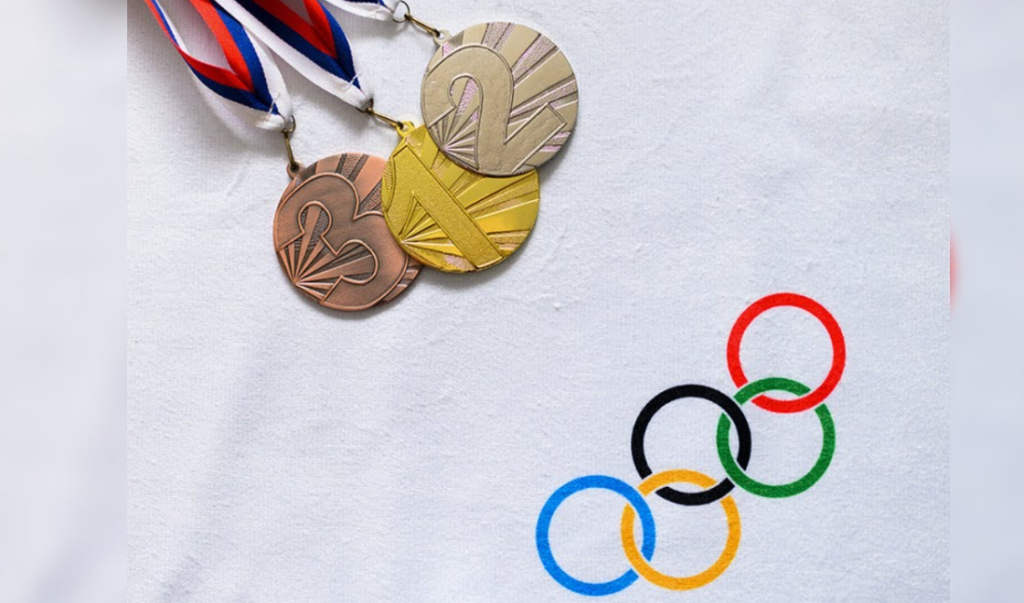
The Olympic Games are sport’s oldest and most enduring institution — a competition whose origins in ancient Greece, revival in the modern era, and continuous evolution across 130 years of contemporary competition have produced records that serve simultaneously as athletic benchmarks and historical documents. Olympic records tell the story of human physical development, technological change, training science advancement, and the specific competitive pressure that the Games’ four-year cycle creates in ways that annual world championship competition cannot replicate. Fans following Olympic sport and international competition with dedicated markets can find comprehensive coverage at dbbet.
The Olympic Games: The First Record and Ancient Origins
The olympic games the first record in the historical sense reaches back to 776 BC — the date traditionally cited as the first recorded ancient Olympic Games at Olympia in Greece, where a cook named Koroibos won the stadion foot race that was the competition’s sole event in its inaugural edition. The ancient Olympics ran continuously for over a millennium — suppressed in 393 AD by the Roman Emperor Theodosius I as part of his campaign against pagan religious practices — producing competitive traditions whose athletic and cultural significance the modern Games deliberately invoked when Pierre de Coubertin organized the revival. The ancient Games’ records were not maintained in the systematic way that modern athletics documents performance — the historical record preserves names of champions across centuries rather than the times and distances that contemporary Olympic record-keeping requires. What the ancient tradition established was the framework of competitive excellence, national representation, and the specific honor attached to Olympic victory that the modern Games inherited rather than invented.
First Olympics: The Athens Revival of 1896
The first olympics of the modern era took place in Athens in 1896 — a competition whose organizational ambition considerably exceeded its practical resources but whose symbolic significance justified the gap between aspiration and execution. Fourteen nations participated, all athletes were male, and the fourteen sports on the program reflected the Victorian era’s understanding of athletic competition rather than a systematic survey of human physical capability. James Connolly of the United States became the first modern Olympic champion — winning the triple jump with a distance of 13.71 meters that contemporary athletes would consider a modest club-level performance but that represented genuine athletic excellence relative to the training methodology and preparation available in 1896. The first Olympics established competitive traditions — national team representation, the medal ceremony, the amateur eligibility framework — that shaped the Games’ development across subsequent decades, and whose legacy persists in modified form within the contemporary Olympic movement.
How Olympic Records Evolved Across the Early Games
The trajectory of olympic records across the Games’ early decades reflects the specific interaction between improving athletic preparation, expanding global participation, and the removal of organizational barriers that had limited competitive quality in the Games’ first editions. The 1900 Paris Olympics and 1904 St. Louis Games were embedded within world’s fair events that diluted their sporting focus — the 1904 Games in particular were so disorganized and poorly attended by international teams that the competitive results carry limited historical authority. The 1908 London Games — the first to be hosted in a purpose-built Olympic stadium — established organizational standards that subsequent editions built upon. The 1912 Stockholm Games introduced electronic timing and photo finish technology that brought precision to record-keeping that human judgment alone could not provide. Each organizational improvement across these foundational editions created the framework within which meaningful competitive records could accumulate.
Legendary Olympic Records That Changed Sport
The Olympic records that have transcended athletic history to become cultural landmarks reflect moments where individual performances exceeded what the sport’s observers had considered achievable within their specific historical context. Jesse Owens’ four gold medals at the 1936 Berlin Games — won in the context of Adolf Hitler’s National Socialist showcase and carrying therefore a political resonance that athletic performance rarely generates — produced sprint and long jump performances that demonstrated human excellence could transcend the ideological framework attempting to exploit the Games for political purposes. Bob Beamon’s 1968 Mexico City long jump of 8.90 meters — exceeding the existing world record by 55 centimeters in a single performance that demolished the incremental improvement pattern that field events typically follow — produced what many athletics observers still consider the sport’s most extraordinary single competitive performance relative to the existing standard it replaced. Nadia Comaneci’s perfect 10.0 gymnastic score in Montreal 1976 — the first in Olympic history, awarded for a performance whose quality the scoring system had not been designed to accommodate — created a moment whose cultural penetration exceeded gymnastics’ normal audience boundaries.
Swimming Records: The Phelps Era and Beyond
Olympic records in swimming reflect both genuine athletic improvement and the specific contribution of technology — particularly the polyurethane suits that temporarily accelerated world record progression in 2008 and 2009 before being banned — in ways that complicate straightforward historical comparison. Michael Phelps’s accumulation of twenty-three Olympic gold medals — a career achievement so far beyond any predecessor that the comparison framework breaks down — represents the most complete expression of individual swimming excellence across a sustained Olympic career in the sport’s history. His eight gold medals in Beijing 2008 — matching Mark Spitz’s 1972 Munich record in a single Games — delivered a performance concentration that the specific circumstances of that Beijing competition uniquely enabled. The records Phelps set across multiple events in multiple Games created benchmarks that the subsequent generation of swimmers has been working to reach rather than building incrementally from the previous generation’s standards.
Athletics Records: The Track’s Historical Timeline
Olympic athletics records document the systematic improvement in human sprinting, jumping, and throwing capability across 130 years of competitive data — a dataset whose patterns reveal both genuine athletic development and the specific contributions of training science, nutrition, equipment, and the contested contribution of pharmacological assistance that the sport’s doping history introduces as a complicating variable. Usain Bolt’s 9.63 seconds 100 meters gold in London 2012 — run in a championship final rather than in the time-trial conditions that world record attempts optimize for — represents the most extraordinary sprint performance in Olympic history when the competitive context is considered alongside the time itself. The women’s 100 meters Olympic record — its historical trajectory complicated by the doping-contaminated era of the 1980s — illustrates how the sport’s integrity challenges affect the historical record in ways that pure performance comparison cannot resolve without engaging with the context surrounding specific performances.
Winter Olympics Records: A Separate Athletic Tradition
The Winter Olympic Games — established separately from the Summer Games in 1924 and operating on the same four-year cycle, offset by two years since 1994 — have produced their own record tradition across alpine skiing, speed skating, ski jumping, and the various sliding and cross-country disciplines that constitute winter sport’s Olympic program. Speed skating’s Olympic records reflect the specific interaction between athletic development and equipment evolution — the introduction of clap skates in the 1990s produced immediate record improvements across multiple distances that reflected genuine biomechanical advantage rather than incremental athletic development. Alpine skiing’s speed event records are circuit and condition dependent in ways that swimming and athletics times are not — the comparison of downhill times across different Olympic courses requires contextual understanding that pure number comparison cannot provide. The Winter Games’ records carry the additional variable of weather and snow conditions that create competitive environments whose specific characteristics affect times in ways that indoor swimming pools and controlled athletics tracks do not introduce.
The Role of Technology in Olympic Record Progression
The history of Olympic records cannot be separated from the history of the technology that produces, measures, and enables them. Timing technology’s progression from stopwatches accurate to the fifth of a second through electronic timing capable of thousandths of a second precision changed not merely how records were measured but how competitive margins were understood. Shoe technology’s evolution — culminating in the carbon fiber plate running shoes that have produced dramatic marathon and distance track time improvements — represents the most significant recent equipment contribution to record progression. Swimming pool technology — wave-reducing lane ropes, depth optimization for reduced turbulence, water temperature standardization — has contributed to the progressive improvement in world and Olympic swimming records beyond what athlete development alone would have generated. Understanding which records reflect primarily athletic improvement and which reflect primarily technological enablement requires engagement with the specific conditions each performance occurred under rather than simple time comparison.
Olympic Records as Cultural Documents
The deepest value of Olympic records across history is not the specific times, distances, and scores themselves but what they document about human aspiration across specific historical moments. Jesse Owens’s Berlin records document defiance as much as athletic excellence. Wilma Rudolph’s triple sprint gold at Rome 1960 — won by a woman who had survived polio in childhood — documents perseverance whose narrative resonated far beyond athletics audiences. Abebe Bikila’s barefoot marathon gold in Rome 1960 — the first Olympic gold for an African nation in athletics, won on the Appian Way under floodlights by an Ethiopian soldier — documents African athletics’ emergence on the world stage in its most dramatic inaugural expression. Cathy Freeman’s Sydney 2000 400 meters gold — carrying the weight of Australian reconciliation politics in the specific context of a home Olympics — documents how completely individual athletic performance can become the vehicle for collective social expression. These records are simultaneously sports data and historical evidence — their dual nature is what makes the Olympic Games unique among sporting institutions and what sustains the cultural significance of Olympic record-breaking beyond the purely athletic meaning that any individual performance carries.
What Modern Olympic Records Reveal About Human Potential
Contemporary Olympic record-setting occurs within a specific tension between the accelerating sophistication of preparation — training science, sports psychology, nutrition, recovery technology, and biomechanical analysis all operating at levels that previous generations could not access — and the physiological limits that human bodies impose regardless of how intelligently preparation approaches them. The progressive slowing of world record improvement rates across multiple Olympic disciplines suggests that the most accessible performance gains have been extracted and that subsequent records require either technological enablement, the emergence of genuinely exceptional individual talent, or some combination of both. The specific records that fall at each Olympics increasingly represent the convergence of multiple favorable conditions — exceptional individual genetics, optimal preparation, competitive environment that motivates maximum performance — rather than the systematic progress that characterized record improvement across the sport’s developmental decades. Understanding this convergence is what makes contemporary Olympic record-breaking genuinely exciting rather than merely expected — the conditions that produce extraordinary performances are increasingly rare, which makes witnessing them correspondingly more valuable.